Dining Tables That Transform Your Home Into a Gathering Space
The Heart of Every Home Starts Here
There is something deeply human about gathering around a table to share food, stories, and laughter. Every well-designed home has a space that anchors daily life, and that space is almost always the dining area. A Dining table is not just a piece of furniture — it is the stage where birthdays are celebrated, homework gets done, and morning chai becomes a ritual. Choosing the right one means thinking beyond aesthetics and considering how your family actually lives. The best tables blend form and function in a way that feels effortless and timeless.
Why Material Choice Defines Your Dining Experience
The material of your table sets the tone for everything else in the room. Solid wood brings warmth, character, and a sense of permanence that few other materials can match. Over time, teak, sheesham, or oak develop a patina that tells the story of every meal shared around them. Marble and stone tops, on the other hand, communicate luxury and sophistication, making them a popular choice for modern urban homes. Glass surfaces open up smaller rooms visually, keeping the space feeling light and airy even when the room itself is compact.
Engineered wood and MDF options have come a long way in quality, offering budget-friendly alternatives that still look polished and refined. The key is to match the material to your lifestyle — a household with young children might prioritize scratch resistance and easy cleaning over a surface that demands careful maintenance. Whatever material you choose, make sure the finish is durable enough to handle daily use without losing its appeal.
Size and Shape: Getting the Dimensions Right
Before falling in love with any particular design, measure your dining space carefully. A table that is too large will make the room feel cramped and movement awkward, while one that is too small leaves the space feeling underwhelming. As a general rule, allow at least 90 centimetres between the edge of the table and the nearest wall or piece of furniture to ensure comfortable movement.
Shape plays an equally important role in how the space functions. Round and oval tables encourage conversation because no one sits at a “head,” making every seat feel equal — ideal for intimate family dinners. Rectangular tables suit longer rooms and work well when you regularly host larger groups. Square tables are perfect for compact spaces and work beautifully in breakfast nooks or studio apartments. Extendable designs offer the best of both worlds, giving you a compact everyday footprint that expands when guests arrive.
Pairing the Right Chairs with Your Table
A dining table is only as good as the chairs that surround it. The relationship between the two is both practical and visual — the height, proportion, and style of your chairs must complement the table for the setup to work as a cohesive unit. Standard dining chair seat height sits between 43 and 48 centimetres, with roughly 30 centimetres of clearance between the seat and the underside of the tabletop for comfortable seating.
Mixing chair styles has become a popular interior trend, where the host chairs at either end differ from the side chairs. This adds visual interest without creating chaos, especially when the pieces share a common colour or material thread. Upholstered chairs add softness and comfort for longer meals, while wooden or metal chairs are easier to clean and maintain. If your home leans toward a minimal aesthetic, sleek armless chairs in a neutral tone keep the focus on the table itself.
Style Trends Shaping Modern Dining Spaces
Interior design trends have shifted significantly toward dining spaces that feel personal, layered, and lived-in rather than showroom-perfect. Natural textures, warm tones, and handcrafted details are all having a major moment right now. Japandi-inspired dining rooms — a blend of Japanese minimalism and Scandinavian warmth — continue to dominate, featuring low-profile furniture, neutral palettes, and organic materials.
Curved furniture has also made a strong comeback, with rounded table edges and softly shaped chairs replacing the sharp angles that defined mid-century modern spaces. Sustainability is another major driver of purchasing decisions, with more buyers seeking responsibly sourced wood, recycled metal frames, and non-toxic finishes. Statement lighting above the dining table has become a design element in its own right, with oversized pendants and sculptural chandeliers drawing the eye upward and creating a dramatic focal point.
How to Layer Your Dining Space for Maximum Impact
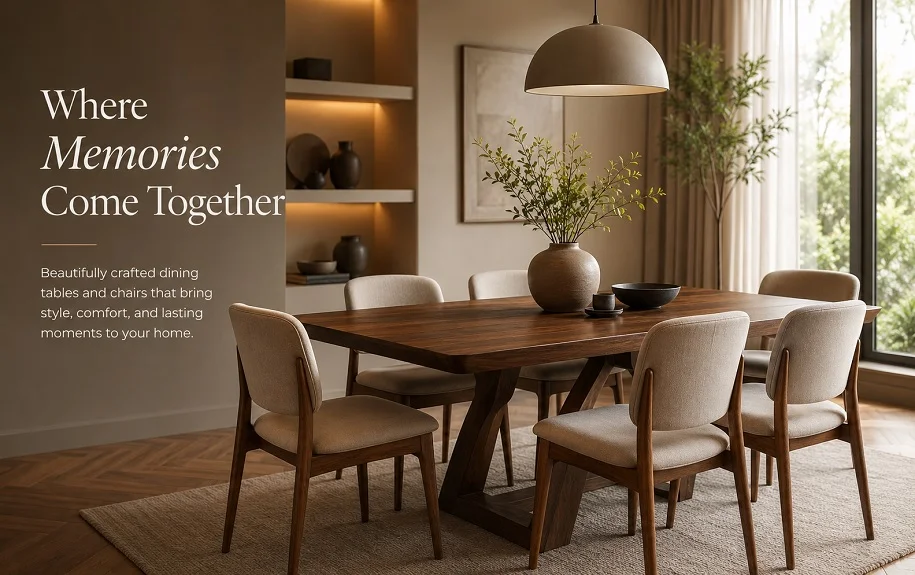
The table and chairs form the foundation, but the layers you build around them are what give the space personality. A well-chosen rug anchored beneath the table adds warmth and defines the dining zone within an open-plan layout. Opt for a rug large enough that the chair legs remain on it even when pulled out — this prevents the rug from flipping and keeps the look intentional.
Centrepieces do not need to be elaborate to be effective. A simple arrangement of seasonal flowers, a cluster of pillar candles, or a curated collection of ceramics can bring the table to life without overwhelming it. Wall art, a sideboard, or open shelving nearby can tie the dining area into the broader design language of your home. Lighting on a dimmer switch gives you the flexibility to shift from bright and functional during meals to soft and atmospheric during entertaining.
Dining Tables for Small Spaces and Compact Homes
Not every home has a dedicated dining room, and that is perfectly fine. Urban apartments and compact homes have driven significant innovation in dining furniture design. A dining table that doubles as a workspace, folds flat against the wall, or tucks neatly into a kitchen corner is a practical solution that does not require you to compromise on style.
Pedestal base tables free up floor space and allow more flexibility in chair arrangement since there are no legs in the corners to navigate around. Bench seating on one side of the table is another space-saving trick that also adds a relaxed, informal energy to the room. Wall-mounted drop-leaf tables are ideal for studio apartments, giving you a functional surface that disappears completely when not in use. The key in small spaces is choosing pieces that earn their place by being both beautiful and genuinely useful.
Caring for Your Table to Make It Last Decades
A quality dining table is an investment, and with the right care it can last generations. Wood tables benefit from regular oiling or waxing to prevent the surface from drying out and cracking, especially in dry climates or air-conditioned homes. Always use coasters, placemats, and trivets to protect the surface from heat, moisture, and scratches during meals.
Marble and stone tops should be sealed periodically and cleaned with pH-neutral products to prevent etching and staining. Glass surfaces are low-maintenance but show fingerprints easily — a microfibre cloth and a gentle glass cleaner keep them looking pristine. Metal frames and legs can be wiped down with a damp cloth and occasionally treated with a protective wax to prevent rust or oxidation. Treating your furniture well from day one dramatically extends its lifespan and preserves its appearance.
Making the Investment worth Every Rupee
Buying a dining table is one of the most considered purchases you will make for your home, and it pays to approach it thoughtfully. Rather than chasing trends that may feel dated in a few years, invest in a design that feels timeless and resonates with your personal style. Think about how the piece will grow with your family — a table that seats four today might need to accommodate six or eight in a few years.
Consider the full ecosystem of the dining space when budgeting: the table, chairs, lighting, rug, and storage all work together. Spending more on a high-quality dining table and pairing it with more affordable supplementary pieces is often a smarter approach than splitting the budget evenly across everything. Brands that offer solid construction, honest materials, and thoughtful design are worth the premium because they deliver lasting value rather than furniture that needs replacing in five years.