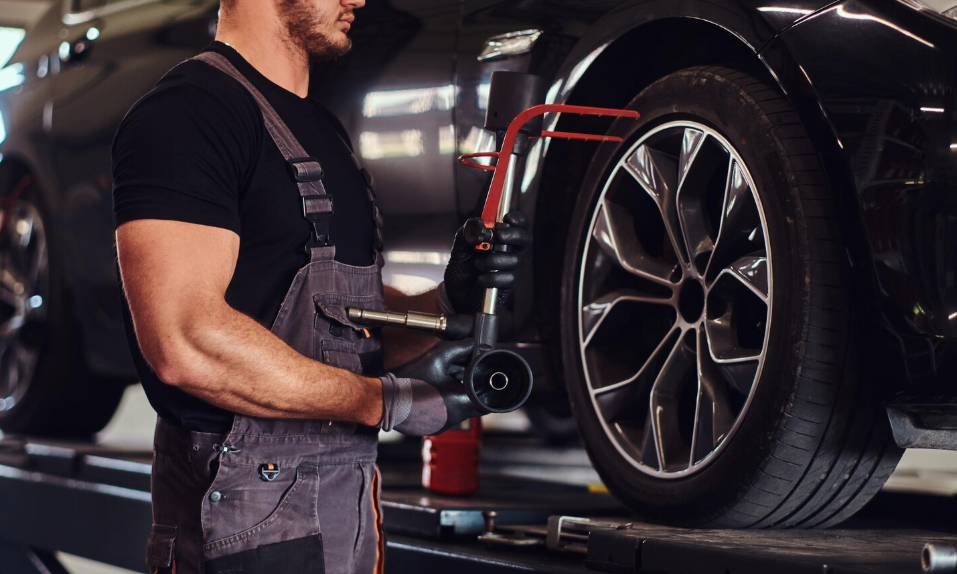
The Role of AI and Automation in Modern Tire Repair and Maintenance
The automotive service industry has never been static. From the first hydraulic lifts to computerized diagnostic systems, every decade brings new tools that change how vehicles are inspected, repaired, and maintained. Today, artificial intelligence and automation are driving the next wave of that change — and the tire repair and maintenance sector is no exception.
For drivers, understanding how these technologies are being adopted helps set expectations about what a modern shop visit looks like and why the industry is evolving the way it is. For shop owners and technicians, these tools represent a genuine opportunity to deliver faster, more accurate service. The shift is already underway, and it’s worth understanding what it actually means in practice.
AI-Powered Tire Inspection Systems
One of the most visible applications of AI in tire maintenance is automated inspection. Traditionally, assessing tire condition required a technician to physically examine each tire — checking tread depth with a gauge, looking for sidewall damage, identifying uneven wear patterns by eye. That process is reliable in skilled hands, but it’s also time-consuming and inherently variable. Two technicians examining the same tire might draw different conclusions.
AI-based inspection systems change that equation. Drive-over scanning platforms, now being adopted by forward-thinking shops around the world, use high-resolution cameras and machine learning algorithms to capture detailed images of each tire as the vehicle rolls across a sensor pad. The system measures tread depth across the full width of the tire, detects uneven wear patterns, identifies sidewall damage, and flags anomalies — all in a matter of seconds.
The output is a consistent, objective report that removes subjectivity from the initial assessment. Technicians still make the final call, but they’re working from far more data than a manual inspection alone would produce.
For customers bringing their vehicles in for Good Tire’s repair services in Calgary, this kind of technology-backed precision means issues are less likely to be missed and more likely to be caught before they become serious — or dangerous.
Predictive Maintenance and Connected Vehicles
Beyond inspection, AI is making inroads into predictive maintenance — the ability to anticipate problems before they occur rather than reacting after the fact. Modern vehicles generate a continuous stream of data through onboard sensors: tire pressure monitoring systems, load sensors, mileage tracking, and driving behaviour data all feed into systems that can model how quickly components are likely to wear.
When that vehicle data is integrated with AI-driven maintenance platforms, it becomes possible to predict when a tire is likely to need replacement based on actual usage patterns rather than generic mileage intervals. A vehicle used primarily for highway driving will wear its tires differently than one navigating stop-and-go city traffic in Calgary every day. AI can account for that difference and deliver recommendations tailored to the individual vehicle and driver.
This is already happening at scale in fleet management, where companies with large numbers of vehicles use predictive maintenance software to schedule tire replacements proactively — reducing unexpected downtime and extending tire lifespan across entire fleets. The same principles are beginning to filter down to consumer vehicles.
Automation in the Shop Environment
Automation is also changing what happens inside the shop itself. Tire mounting and balancing machines have become increasingly sophisticated, with modern equipment capable of performing precision balancing with minimal technician input. Some systems now incorporate automatic optimization — identifying the ideal rotational position for a tire and wheel combination to minimize vibration — a process that was previously done manually and varied in outcome depending on the technician’s experience.
Robotic tire changers, while not yet universal, are in active use in high-volume operations and are improving rapidly. These systems reduce the physical strain on technicians and improve consistency, particularly on large-format tires like those used on trucks and SUVs, where manual mounting is more physically demanding and more prone to variation.
For alignment, computerized systems with automated measurement and correction guidance have been standard for years, but newer generations of this equipment use AI-assisted analysis to account for vehicle-specific variables more precisely than earlier systems could.
What AI Cannot Replace
It’s worth being clear about the limits of these technologies, because they matter. AI inspection systems are excellent at measuring and detecting patterns, but they don’t replace the judgment of an experienced technician who understands the full context of a vehicle’s history and usage. A scan might flag a wear pattern as unusual — but it takes a human technician to understand whether that pattern is the result of alignment, suspension wear, driver behaviour, or some combination of all three.
Similarly, automated mounting and balancing equipment improves consistency and efficiency, but it doesn’t eliminate the need for skilled technicians who can recognize when something isn’t right, troubleshoot unexpected issues, or handle unusual wheel and tire combinations that fall outside standard parameters.
The most effective modern shops are those that use these tools to augment their technicians’ capabilities rather than replace them. Technology handles the repetitive, data-intensive aspects of inspection and measurement. Technicians apply knowledge, experience, and judgment to everything the technology surfaces.
The Customer Experience Is Changing Too
From the customer’s perspective, AI and automation translate into faster service, more transparent reporting, and a higher degree of confidence in the assessment they receive. Printed or digital inspection reports with photographic documentation of tire condition give customers something concrete to refer to — rather than taking a technician’s word for it, they can see exactly what was found and why a recommendation was made.
That transparency builds trust, and in a service industry where trust is the primary currency, that matters enormously. As these technologies continue to develop and become more widely adopted, the gap between shops that embrace them and those that don’t will become increasingly visible to customers who know what to look for.
The fundamentals of tire repair haven’t changed: a damaged tire still needs to be properly assessed, repaired or replaced, and fitted correctly. What’s changing is the precision, speed, and consistency with which all of that can be done — and that’s a development worth paying attention to.