Home Improvement & Interior Decoration: A Complete Guide to a Better Home
Your home should feel comfortable, practical, and personal. It is not simply a place where you sleep or store your belongings. It is where you spend time with family, relax after work, welcome guests, and create everyday memories. That is why thoughtful Home Improvement & Interior Decoration can make such a noticeable difference.
Improving a home does not always mean spending a large amount of money or completing a major renovation. Sometimes, changing the layout, improving lighting, updating furniture, or introducing better storage can completely change how a room feels. The key is knowing what your home needs and making improvements that support both function and style.
Understanding Home Improvement and Interior Decoration
Home improvement generally focuses on making a property more useful, comfortable, efficient, or visually appealing. It can include anything from repainting walls and replacing flooring to renovating kitchens, upgrading bathrooms, improving lighting, or creating additional storage.
Interior decoration is more focused on the appearance and atmosphere of the space. Furniture, colors, curtains, rugs, artwork, lighting, decorative objects, and accessories all contribute to the overall look.
Although these are different areas, they work best together. A beautifully decorated room may still feel uncomfortable if the layout is poor, while a functional room can feel cold without thoughtful decoration.
A balanced approach combines practical improvements with design choices that reflect your lifestyle.
Start With a Clear Plan
Before buying furniture or choosing paint colors, think about how you actually use each room. A living room designed for entertaining will have different requirements from a quiet reading area. Similarly, a dining space needs enough room for people to sit, move around, and comfortably serve food.
Start by identifying the problems you want to solve. Perhaps the room feels too dark, there is not enough storage, the furniture makes the space feel crowded, or the overall style feels outdated.
Once you understand the problems, prioritize improvements. Deal with structural or functional issues first and decorative changes afterward. This approach prevents unnecessary spending and makes the entire project easier to manage.
Improve the Layout Before Adding More
One of the simplest ways to improve an interior is to reconsider the furniture arrangement. A room can feel completely different when furniture is moved into a more practical position.
Avoid placing too many large pieces close together. Create clear walking paths and leave enough space between furniture so the room does not feel cramped. In smaller homes, multifunctional furniture can be particularly useful because one item can serve several purposes without taking up unnecessary space.
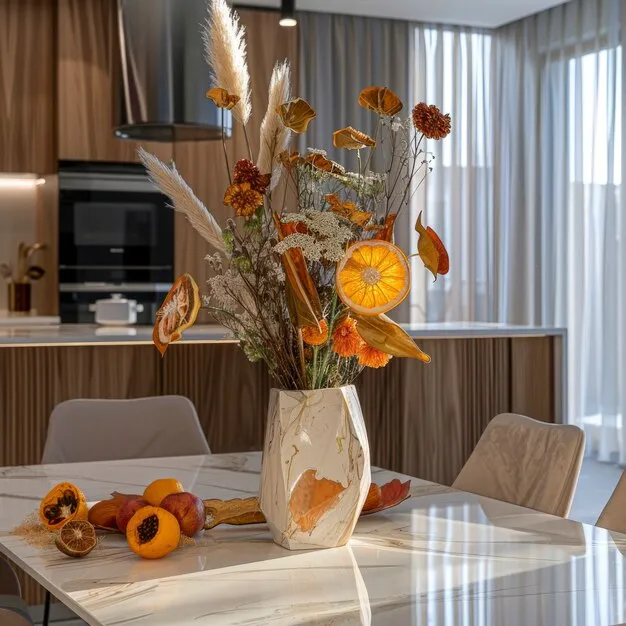
The dining area is another place where furniture can influence the entire atmosphere of a home. Choosing the right table can turn an ordinary eating area into a welcoming place for conversations and gatherings. For more ideas, explore Dining Tables That Transform Your Home.
Use Lighting to Change the Atmosphere
Lighting is often underestimated during home improvement projects. The right lighting can make a small room appear more open and can also create warmth in larger spaces.
Instead of depending entirely on one ceiling light, consider combining different types of lighting. General lighting provides overall visibility, while task lighting works well for activities such as reading, cooking, or working. Accent lighting can highlight artwork, architectural features, shelves, or decorative objects.
Natural light should also be used whenever possible. Keep windows clear of unnecessary obstructions and choose window treatments that allow daylight into the room while still providing privacy when needed.
Choose Colors With Purpose
Color can influence how a room looks and feels. Light and neutral shades can help smaller spaces feel more open, while deeper colors can add warmth and character to larger rooms.
You do not need to use the same color throughout your entire home. Instead, create a visual connection between rooms by repeating certain tones, materials, or decorative details.
Before committing to a particular paint color, test it in the actual room. Lighting conditions can change how a color appears during the morning, afternoon, and evening.
Invest in Furniture That Fits Your Lifestyle
Furniture should look good, but appearance should not be the only consideration. Comfort, durability, size, and functionality are equally important.
A sofa that looks attractive but is uncomfortable will quickly become frustrating. Likewise, an oversized dining table can make movement difficult in a compact room.
Think about how many people regularly use the space and what activities take place there. Families may need durable materials and flexible furniture, while someone living alone may prefer a simpler arrangement with fewer pieces.
Quality does not always mean choosing the most expensive option. It means selecting pieces that suit your needs and are likely to remain useful for years.
Make Storage Part of the Design
Clutter can make even a beautifully decorated home feel uncomfortable. Good storage helps maintain a clean appearance while making everyday life easier.
Built-in shelves, storage benches, cabinets, baskets, and multifunctional furniture can help keep belongings organized. In smaller rooms, vertical storage can be particularly effective because it uses wall space without taking valuable floor area.
Storage should also be easy to access. If frequently used items are hidden in difficult-to-reach locations, the system may not remain organized for long.
Bring Personality Into Your Interior
A home should not look like a showroom. Personal items are what make a space feel lived-in and meaningful.
Photographs, books, artwork, plants, travel memories, and carefully selected decorative pieces can give rooms character. The goal is not to fill every empty surface but to choose items that have meaning or complement the overall design.
A simple room with a few thoughtful details can often feel more sophisticated than one filled with unrelated decorations.
Think Beyond Residential Design
The principles of good interior design also apply to workplaces and commercial environments. Businesses need spaces that look professional while supporting productivity, comfort, collaboration, and the experience of visitors.
If you are interested in applying similar principles to a workplace, these Commercial Interior Design Tips can provide useful ideas for creating a more functional office environment.
Make Improvements Gradually
You do not have to transform your entire home at once. In fact, improving one area at a time can make it easier to control costs and make thoughtful decisions.
Start with the room that needs the most attention. Once its layout, lighting, furniture, and decoration are working well together, move on to the next space.
This gradual approach also gives you time to understand what works in your home. You may discover that a small change, such as replacing outdated lighting or rearranging furniture, has a bigger impact than an expensive decorative purchase.
Final Thoughts
Successful Home Improvement & Interior Decoration is about more than following the latest design trend. The best home is one that works for the people who live in it while reflecting their individual tastes.
Focus on functionality first, then build the visual style around it. Pay attention to layout, lighting, color, furniture, storage, and personal details. Most importantly, make decisions based on how you want your home to feel and function every day.
With careful planning and a few well-chosen improvements, even a familiar space can feel fresher, more comfortable, and better suited to modern living.