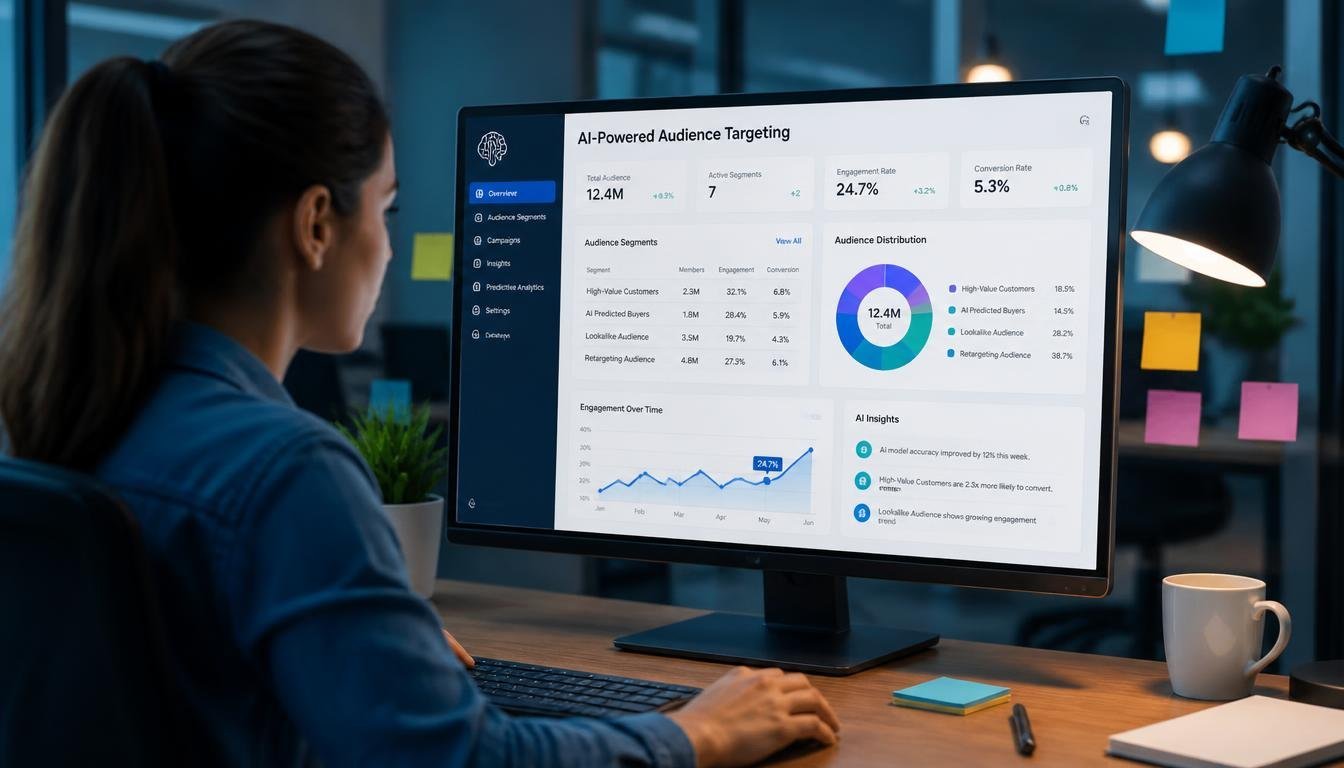
How Artificial Intelligence Is Transforming Audience Targeting in Digital Marketing
Key Takeaways
-
AI is driving precise audience segmentation, allowing marketers to reach highly specific customer groups.
-
Predictive analytics powered by AI enable marketers to anticipate behaviors and optimize marketing performance.
-
AI tools deliver scalable marketing solutions for campaign management and real-time optimization.
Artificial Intelligence (AI) is redefining digital marketing by revolutionizing how marketers approach audience targeting. Once limited by broad, somewhat generic demographic data, businesses now leverage advanced AI algorithms to unlock granular insights into consumer preferences and behaviors. The evolution of ad tech platforms powered by AI has elevated targeting capabilities, helping brands deliver the right message to the right audience at the right time.
With sophisticated machine learning and data analysis, AI enables a fundamental shift in audience engagement. Brands can move beyond guesswork and historical stereotypes, instead using real-time data to personalize experiences, predict needs, and optimize campaigns. As AI technology grows, digital marketers gain a competitive edge by translating complex data into actionable marketing strategies.
AI-Powered Audience Segmentation
Traditional segmentation strategies often grouped customers by age, gender, or location, resulting in campaigns that sometimes missed the mark. AI takes segmentation to an entirely new level. By analyzing massive datasets, including online behavior, purchase history, social signals, and even content consumption, AI tools create highly detailed customer profiles.
With these profiles, brands can segment their audience not only by static attributes but also by behavioral signals such as intent to purchase, engagement history, and lifecycle stage. These refined segments ensure that every dollar spent on digital advertising is more likely to drive engagement and conversions. Industry leaders emphasize that AI-driven segmentation is key to delivering hyper-personalized marketing.
Predictive Analytics for Enhanced Campaign Performance
The predictive power of AI is one of its most valuable contributions to digital marketing. By analyzing patterns in historical data, AI can forecast future actions, such as identifying which customers are most likely to convert, unsubscribe, or return for a repeat purchase. Marketers use these insights to develop proactive strategies, like offering retargeting discounts before a customer churns or recommending products the moment a customer signals interest.
Predictive analytics enhances campaign performance by allowing businesses to allocate resources efficiently and reduce wasted ad spend. Instead of relying solely on post-campaign analysis, marketers can optimize in real time. This level of adaptive strategy sets brands apart in today’s highly competitive landscape.
Scalable and Efficient Marketing Solutions
AI-driven tools automate labor-intensive aspects of digital marketing, such as content creation, audience analysis, and ad placement. Machine learning models enable instant analysis and on-the-fly campaign adjustments, delivering messages to high-potential segments when it matters most. This not only saves time but also reduces the risk of missed opportunities.
Marketers also benefit from increased scalability. Automated processes free up human resource bandwidth, allowing creative teams to focus on strategy while AI handles execution and optimization. Whether adjusting paid search bids in real time or dynamically changing display ads, the result is a more efficient and responsive marketing operation.
Challenges and Considerations
Despite enormous benefits, incorporating AI into digital marketing introduces several challenges. Chief among them are data privacy and regulatory compliance. AI systems require access to large amounts of consumer data, which raises ethical and legal considerations. Marketers must prioritize transparency and follow consumer data protection laws such as GDPR and CCPA.
Implementing AI also requires significant investment in terms of both technology and skilled personnel. Smaller organizations may face resource limitations, while larger enterprises must ensure the security and integrity of AI systems that manage sensitive information.
The Future of AI in Digital Marketing
AI’s influence in digital marketing is only set to expand. Natural language processing technologies are advancing, enabling the creation of highly personalized content and smarter chatbots. In the near future, AI is likely to enhance not only how brands target their audiences but also how they interact with them, providing real-time support and tailored recommendations across channels.
As the technology matures, marketers who embrace AI-driven strategies will lead the field in both innovation and customer engagement. Continuous adaptation and a keen eye on ethical best practices will be essential to capitalizing on the advantages AI offers in an ever-changing digital landscape.
Conclusion
The rise of artificial intelligence is revolutionizing audience targeting in digital marketing. AI empowers marketers to segment audiences with unprecedented accuracy, predict behaviors, and automate routine tasks for scalable campaign management. By adopting cutting-edge AI solutions, marketers can improve engagement, streamline operations, and deliver better results for their brands. As digital marketing evolves, AI will remain a crucial driver for creativity, innovation, and business growth.