How AI Is Shaping the Future of Copywriting
Key Takeaways
- AI speeds up draft and headline creation, while humans fine-tune tone.
- Personalized content improves engagement with audiences.
- Automation frees writers to focus on creative ideas.
- AI helps maintain a consistent brand voice across platforms.
- Copywriters now guide AI, balancing ethics, accuracy, and creativity.
In recent years, artificial intelligence has begun to influence many aspects of the creative industry, and the world of written content is no exception. As businesses and individuals increasingly rely on digital communication, the demand for clear, engaging, and persuasive writing has grown. Technology is now streamlining content creation, assisting writers, and offering tools that help craft messages more efficiently. These developments are prompting professionals to reconsider traditional approaches to writing and explore how technology can enhance their work.
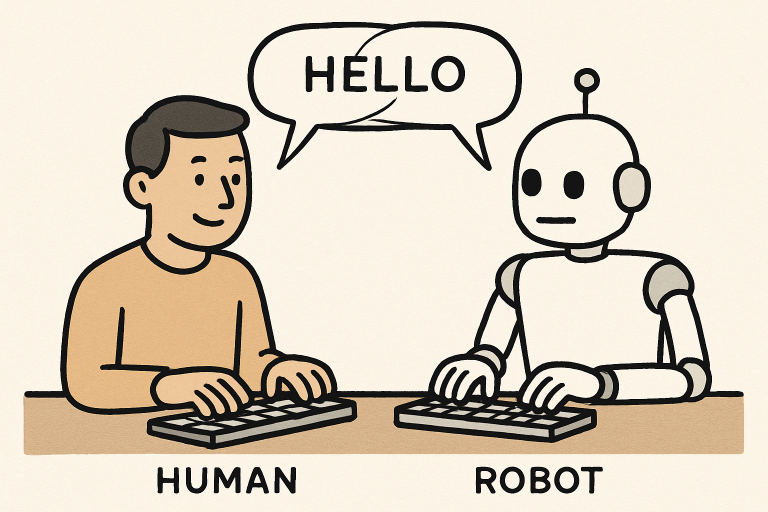
The intersection of copywriting and AI illustrates how machines can support human creativity rather than replace it. AI-powered tools can analyze trends, suggest improvements, and even generate drafts, allowing writers to focus on refining tone and style. By combining the analytical capabilities of AI with the intuition and nuance of human writers, the future of content creation promises to be more adaptable, informed, and responsive to audience needs.
AI’s Role in Content Generation
At the heart of AI’s growing footprint in copywriting are sophisticated language models such as ChatGPT and Writesonic. These platforms rapidly generate headlines, articles, social captions, and more from user-supplied prompts. Drawing from vast datasets, AI tools provide rapid drafts that mimic specified brand tones. However, while the convenience is clear, success still requires human oversight. Editors must review the content to correct any off-key language, repetitive phrasings, or mechanistic structures. To help bridge the gap, “AI Humanizer” tools adjust AI outputs for greater readability and relatability, often by varying sentence structure and introducing natural language patterns.
Enhancing Personalization and Engagement
One of AI’s key strengths is its ability to personalize content at scale. By analyzing behavioral data, user preferences, and previous interactions, AI can generate email copy, website messages, or ad copy tailored to individual or segment-level preferences. This targeted approach boosts engagement rates, making messages feel more relevant and encouraging deeper connections with audiences. In industries like e-commerce and digital publishing, this capacity for real-time customization was impossible to achieve manually and has led to measurable improvements in response rates.
Improving Efficiency and Productivity
AI streamlines the creation process for copywriters, automating routine drafting, SEO suggestions, and formatting tasks. What once required an hour of brainstorming and composition can now be completed in minutes, freeing writers to focus on ideation and creative innovation. These tools also support A/B testing by easily generating multiple content variants for different platforms, resulting in more compelling and tested campaigns.
Maintaining Brand Voice and Consistency
As AI models continue to evolve, their ability to capture and maintain a brand’s unique voice is becoming increasingly sophisticated. Instead of only responding to keywords or rigid guidelines, emerging tools learn from a brand’s entire content history, picking up contextual signals and subtle stylistic cues. They can automatically adjust tone and phrasing, ensuring messaging feels on-brand whether delivered via a LinkedIn article, a promotional email, or a TikTok ad. This means businesses can achieve global scale with consistent, human-like messaging that feels true to their core values.
- Language models can be “trained” on brand archives, enabling nuanced replication of branded tones.
- Advanced AI selects specific voice adaptations for each distribution channel.
- Marketers can experiment with playful, formal, youthful, or industry-specific styles while staying brand-aligned.
Copywriters are essential for stewarding these AIs, continually fine-tuning algorithms and sampling outputs to prevent voice drift or loss of authenticity.
Challenges and Ethical Considerations
The rise of AI-generated content raises fundamental challenges. Detecting and correcting factual inaccuracies or unintentional plagiarism is critical, as AI can inadvertently reproduce content it has seen in its training data. Another major concern is the diminishing “human touch”, the instinctual empathy and creativity that underpin the most compelling messaging. Moreover, companies must be transparent about their use of AI and ensure that their tools do not perpetuate biases found in source data. Developing ethical frameworks and oversight is vital to preserving trust, credibility, and inclusivity.
The Evolving Role of Copywriters
As AI handles more technical and repetitive composition, the human copywriter’s job is evolving. Today’s professionals serve as both creative strategists and “prompt engineers,” responsible not only for producing content but also for orchestrating AI tools to ensure outputs align with brand guidelines and campaign objectives. Mastering these technologies is now part of the copywriting skill set, alongside critical thinking and audience analysis. This blend of art and science is shaping the next generation of creative leadership in marketing and communications.
Future Trends in AI and Copywriting
With ongoing advances in natural language processing and machine learning, AI’s integration into the writing process will only deepen. Future systems will be able to interpret tone, intent, and context with even more subtlety, generating content that is contextually relevant and emotionally engaged. AI will not just generate content; it will also help identify consumer trends, inform content strategy, and optimize for distribution in real time. This continuous evolution will lift global standards for personalization and relevance in every digital interaction.
Conclusion
AI is shaping the future of copywriting by enabling scalable, personalized, and efficient content production. While these technologies bring remarkable benefits, the irreplaceable value of human creativity, ethical judgment, and genuine connection remains paramount. Copywriters who embrace AI as a collaborative partner, rather than an adversary, will thrive, steering the industry forward with both innovation and integrity.